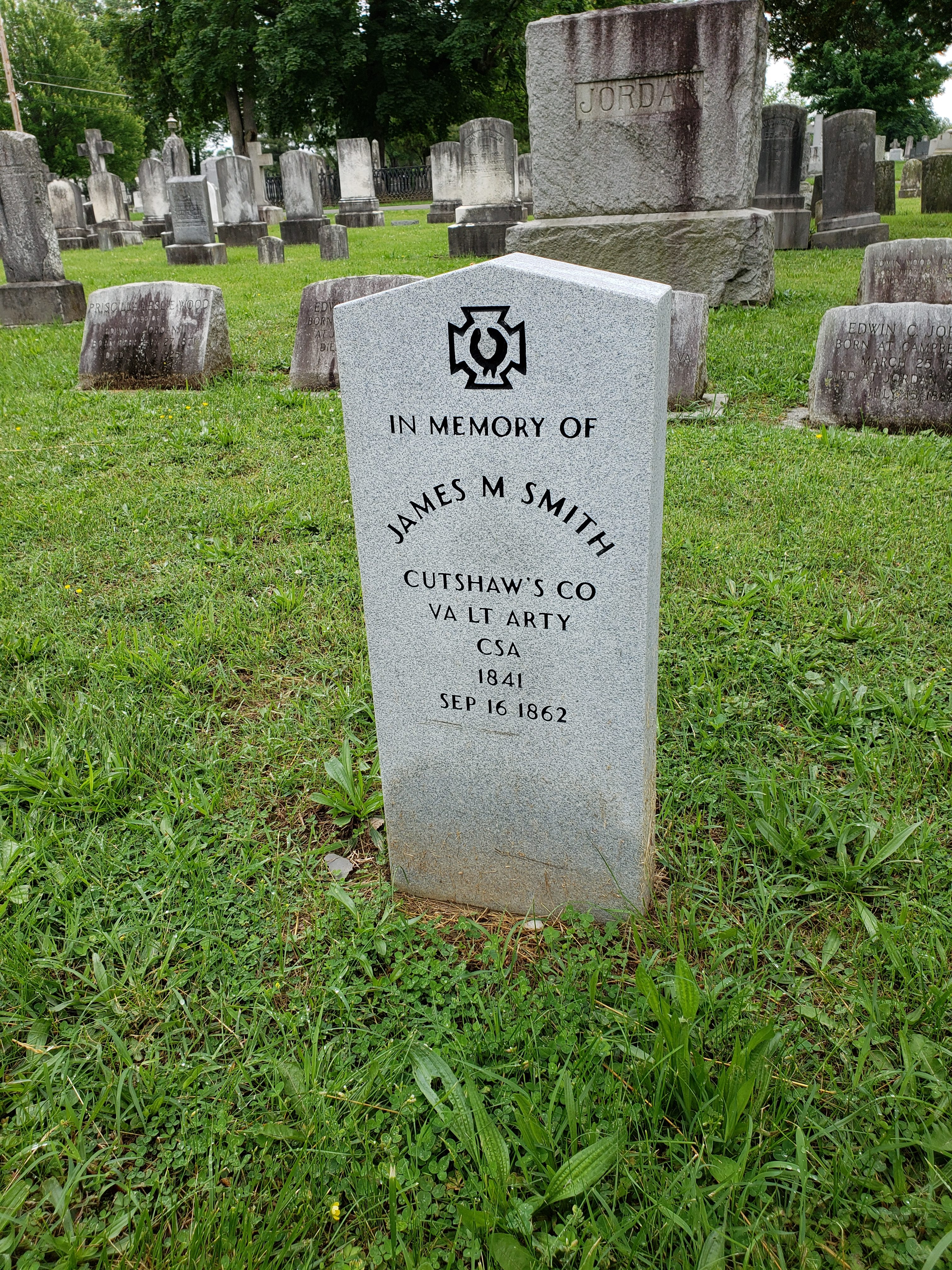
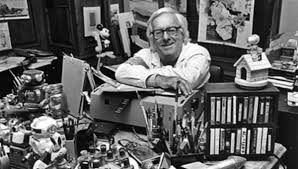
We of a certain age tend to wax nostalgic about those fabulous 60s. What, you don’t remember those fabulous 60s? Well, that’s because you’re not of a certain age or, as the old joke goes, you did the 60s right. Authors of a certain age write wistfully pleasant stories about growing up back then, such as Ray Bradbury’s Something Wicked This Way Comes, Stephen King’s “The Body,” and presented for your consideration, Robert McCammon’s Boy’s Life.
Set in a small Alabama town in the late 50’s through early 60s, Boy’s Life is a murder mystery and a horror novel and a YA wizard story and To Kill a Mockingbird and you would think wrapping all that into one novel wouldn’t work but, surprise, it does. That’s because all of those are mere elements of the bigger story, which is coming of age in a time when America went from its best to its worst. Oh yeah, I’m telling you, that time period was the best. I’m sorry most of you didn’t get to experience it; instead, you get this sneering, leering mediocrity we call modern times and think because you’ve got the internet that you’ve got it all. You don’t. You missed it. People of a certain age are writing these golden-hazed novels in an attempt to explain and describe what you missed. My upcoming Frank Vaughn trilogy (WARNING!!! SHAMELESS SELF-PROMOTION AHEAD!!!) … Frank Vaughn Killed by his Mom, Southern Gothic, and Looking for Don…is my own poor effort, although you’ll see that my 60s weren’t all that golden-hazed.
Anyways, McCammon’s protagonist is 11-year-old Cory living in the small town of Zephyr, Alabama (a geographically challenged location because it is outside Robbins AFB, which was actually in Georgia). At about oh-dark-thirty one morning, he’s accompanying his father on a milkman route (yep, it’s early enough in the 60s for there to be milkmen) when a car zooms across the front of them and plunges into a bottomless lake. Cory’s Dad jumps in to save the driver because that’s what the stalwart men of the 60s (and all the men of the 60s were stalwart. Except Maynard) 
did and finds a guy handcuffed to the steering wheel with piano wire wrapped around his neck so already dead and it’s a murder and a whodunit…and herein arises the first of several annoying plot points because Cory sees what could be the murderer standing by the side of the road watching the attempted rescue, and later finds an important clue at the same spot and doesn’t bother telling anybody about it. Really? What self-respecting 11-year old wouldn’t be pulling on Dad’s lake-soaked shirt and going, “Uh, Dad…”
Cory enters a short story contest put on by the town library and writes about the murder, including details of what he saw, and reads it aloud to, oh, everybody in town, thereby revealing to the Sheriff and Dad and, heck, the world that he’d withheld important information. That should righteously PO both Sheriff and Dad, but no. I guess Dad is too stalwart a guy to get mad at his son for committing a minor felony like obstruction, and the Sheriff turns out to be crooked anyway so discount him. Everyone else in town? They’re like, “Fancy that, the kid withheld important information. Guess I’ll get some coffee.” Even the murderer, who becomes apparent about halfway through the story despite gigantic red herrings tossed by the bucket load in your face, makes nothing of it. Like I said, annoying plot points.
There is a river monster that everybody believes in until Cory and a witness see it and then no one believes it exists anymore, which is just odd; a triceratops that no one knew was a triceratops rampaging the countryside; a dog a la Pet Sematary; a rather obvious racist bombing plot; a voodoo priestess, a voodoo priest, and Cory and his pals sprouting wings and flying around. That about covers all the remaining plot points thrown willy and nilly to move things along and, you know, so what? ‘Cause that ain’t what this is about. Plot, I mean.
It’s about what you missed.
Go into this book with that in mind and it becomes something different: a portrait, and a pretty good one. I, too, lived for a time during the 60’s in a small Alabama town and I gotta say, McCammon nails the zeitgeist. Like Zephyr, my town had a local slattern running a house of ill repute, a local group of moonshiners, casual racism, a local rich eccentric, a local monster known as the Cryman soon to be (WARNING!!! SHAMELESS SELF-PROMOTION AHEAD!!!) novelized by yours truly, and ghost hot rods disappearing in the mists. I rode my bike like Cory did, hither and yon across fields and dusty roads from dawn to well past dusk with nary a parental concern, cruised woods and swamps and rivers in the company of pals, ran from bullies, sang and danced to the ever burgeoning catalogue of new bands like the Beach Boys and the Rolling Stones, and collected Famous Monsters and it was all safe, all wonderful, all magic. And don’t give me that rich white privilege BS. We weren’t rich, and lots of unwhite boys shared the same experiences. It was the time. You missed it.
I wish you hadn’t.
I don’t usually review non-fiction books because I’m there to learn, not criticize, unless the book is obviously wrong (I’m looking at you, Hillary). But I must sing the praises of Govert Schilling’s Ripples in Spacetime, which concerns gravitational waves; specifically, the astonishing and world-changing first detection of such a wave on 14 Sep 2015
by the Laser Interferometer Gravitational Wave Observatory (LIGO).
What, you’re not astonished?
You should be.
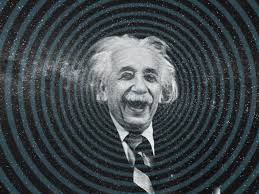
So what’s a gravitational wave and what’s the big deal? Let me take a Great Unwashed stab at it: a gravitational wave is a ripple in reality, a stretching…for lack of a better word…of time and space. Einstein (who else?)
predicted that the extremely powerful forces of star collapse and/or black hole collisions 
could actually warp time and space, which was nice theory until 14 September and then it was no longer theory. This certainty to which you cling? It ain’t there. Everything regarded as fixed and permanent is not.
Now, yes, I know, I have glossed and short-shrifted much here and even the dullest of physicist is rolling eyes at my Great Unwashedness and tutting over things I have obviously left out or misunderstood and fine, great, condescend much? Point is, I would not have even this lower-than-basic grasp if it wasn’t for this book. At the risk of hyperbole, Schilling is Prometheus bringing fire. At least to me.
Because now, I grasp stars. Didn’t used to.
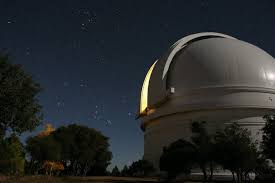
I wanted to be an astronomer growing up. And a cowboy, and a firefighter, yeah, yeah, pretty much every average kid wants to be all three at one point (imagine how cool a cowboy firefighter astronomer would be). But while I never had a horse or red truck, I did have a dinky little 60x telescope through which I swore I saw the Apollo 11 command module circling the moon that night in July 1969. I was going to work on Mt. Palomar
and wear a white lab coat and squint through eyepieces and, one day, see the Eye of God
squinting back. So what stopped me?
Math.
By the time I got to Algebra II, I was a goner. Just. Didn’t. Get. It. And I was a good student, got A’s in everything…except math. C’s, mostly. And because one of the basic requirements for squinting through eyepieces was math beyond Algebra II, I was doomed. And frustrated. Why don’t I get math? My brother, who dropped out of high school, grasped physics and calculus and trig like it was simple addition and subtraction. ‘Course, he has a genius IQ, proof that school bores the uber-smart so much they dispense with it. I do not have a genius IQ. I have one high enough to know what I want, but low enough to prevent its accession. Not for lack of trying. I took a basic astronomy course in college as a backdoor way in but, as soon as we reached star composition, got lost. So I put away that childish thing of being an astronomer because I will never, ever, get this. And then I read this book.
And now grasp stars.
Not enough to rekindle that long dormant astronomer career but enough to understand what I squint at through eyepieces. The endlessness of space, the time traveling, the mind-blowing amounts of energy involved, the speeds…man. Schilling explains it all in very basic language that, at times, sounds a bit patronizing except he seems to know that guys like me are willing to be taught so he stays on this side of snobbery. Which is fine; at this point in my life, I am willing to be taught. His detailed and patient description of how neutron stars form is a grand example. Man. The sheer power involved in the squeezing of atoms to such densities is downright terrifying.
If I have a nit, it’s that Schilling takes a journalist approach to the entire gravitational wave industry and reports on every. Single. Program. Out there. Even ones still on the drawing board and fine, great, I get that, but really, spend more time on what all this means. Is my Monday now going to be longer? Is my drive to the beach shorter? Should I time either or both to coincide with the next supernova? We Unwashed want to know.
Good job, Mr. Schilling. How ‘bout you do the next book on atoms, another concept I never understood and still don’t. You mean, this rock I’m holding in my hand is nothing but billions of little solar systems?
Hmm.
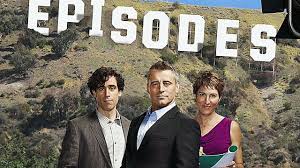
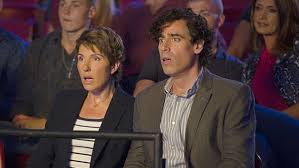
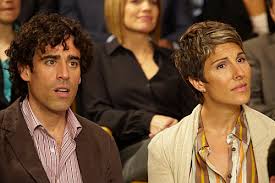
Netflix has started running one of the top five comedies of all times, Episodes…yeah, yeah, I know, I already picked the top five comedies ever and made nary a mention of it but, hey, it’s one of the best comedies ever written. And, really, what are top five or top anything lists anyway but an arbitrary selection based on spurious criteria? So elitist. There’s probably some branch of arcane mathematics allowing more than five entries into a top five list, sort of like Zeno’s arrow that never goes anywhere so let’s just stay with that. Anyways, the show is brilliant, in that Brit use of the word brilliant and, well, in the American use, too. Who knew Matt LaBlanc 
was such a scream? But I’m not raising the show to talk about the show. I do so because, more and more, I feel like Sean and Beverly.
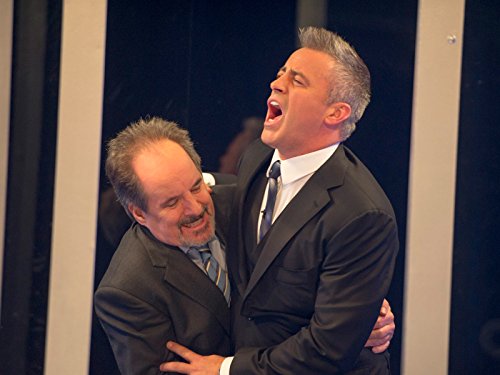
Those of you familiar with the show are nodding sagely, so for those of you who aren’t, Sean and Beverly are the only two sane people in Hollywood. They made a deal with the devil in the form of Hollywood producer Merc Lapidus
and brought their successful BBC show to America for a Hollywood makeover. They are now in the Twilight Zone, in Bizarroworld, where up is down and good is wrong and any one-eyed person in this land of the blind is simply dismissed as aberration. Every day they witness an almost nuclear level of stupidity. Sean and Beverly spend a good portion of the show exchanging helpless glances of sheer astonishment, because they are living with aliens.
As am I. To wit:
because the Russians did not get Trump elected. Hillary did. Knock it off.
because get real. But, but, there’ll be fewer people getting killed and/or hurt if we just take everyone’s guns away! Yeah? Then please explain why, during the 60s when I was a kid, every house had about 150 unregistered and loaded guns lying around the front yard unlocked and available and we did NOT have mass shootings. Don’t bother, I’ll tell you why: it would have been considered bad form. Yeah, it’s that simple. Anybody who would take a gun to school to settle a score would forever and ever be regarded, along with every member of their family down to the third cousins, as a sniveling coward too much of a pansy-ass to stand up for themselves. It would have been the equivalent of dropping an H-Bomb on Paris because De Gaulle said something rude about Johnson’s Mom (come to think of it…). Anyways, knock off that whole blame the gun stupidity. Next thing you know, some idiot will want to ban knives.
3. Facebook. Okay, you are putting your face, your birthday, your pets, your food and every single thought that comes to your mind on the internet. The internet. And you are shocked and appalled when the Russians (see above) know what your favorite color is? Or Amazon knows the last one hundred things you looked at on their site?
Wow. Just wow.
Sean, Beverly, I feel your pain
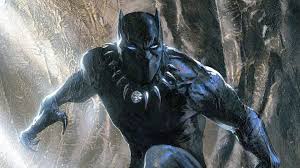
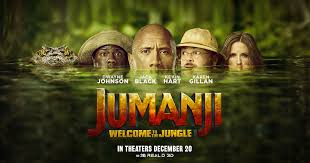
A series of unfortunate events had kept me from seeing Black Panther until last Tuesday. I was attempting to coordinate four tickets and discovered the nigh impossibility of getting two people on the same sheet of music, much less four, but eventually the planets aligned…for three of us, at least. And since I had gone through all the trouble of getting three of us there and was feeling all jungle-y, I and son decided to go see Jumanji, too. 
Yes, Jumanji, still in the theaters despite the Black Panther onslaught. I think that had more to do with February/March being sucky release months than anything. Verdict?
Go see Jumanji. It’s the much better movie.
Like everyone else with a pulse, I walked into Black Panther sporting great expectations. I mean, this was the greatest movie ever made, the greatest Marvel ever, 1000% ratings on all the sites, the movie that’s going to change all movies forever and ever, world without end. Golly. This should be good.
It wasn’t. It downright sucked.
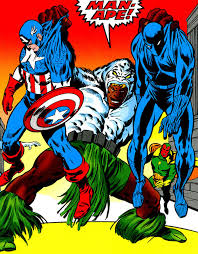
The Amazing Lucas here does a much better job than I ever could expressing our mutual dismay, but I will add my two cents. First, the Black Panther from Civil War was the Black Panther I expected: a complete and total bad ass. Took on Cap and Winter Soldier and damn near did both of them in. Guy who can do that is no slouch. But the T’Challa of this movie wasn’t at the same level of badassery. Far from it. He was a vacillating, simpering, hesitant naif with a fraction of the combat prowess previously displayed. I guess he got a bad batch of purple flowers or something. He should have dispatched Man Ape
on his way to breakfast. Yeah, yeah, they made him take the blue pill before the fights and maybe it’s a bit unfair to have a guy with the DTs defend his kingship. But that’s the way they do things in Wakanda.
Again, Lucas has done a much better job that I ever could criticizing the Wakandan Rules of Succession but, really? Really? One-on-one armed combat to the death? Not exactly a stellar means of government transition, is it? I mean, you can’t expect to wield supreme authority just because some watery tart threw a sword at you. How long has this been going on, three-or-four hundred years? No way. After oh, say, a week, the biggest and meanest Wakandan would have gathered up a few of his friends and taken the place over and spent centuries killing any other Wakandan who even blinked at him sideways. How do you think the English aristocracy got started?
Second, Wakandans are dicks.
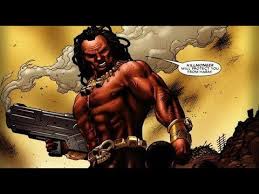
Here they are, sitting on some of the most amazing tech and science in the universe, and they’re hiding it underneath a jungle holograph. What dicks. They have anti-gravity, cures for paralysis, can basically bring back the dead, and don’t forget, got those purple flowers, all of which they’re hoarding for themselves. What a dick move. This made me very sympathetic towards Killmonger’s political platform, although his methods seemed a bit excessive.
One of the most entertaining villains in a while, and they bagged and tagged him.
Dick move, Marvel.
So I was not in the best of moods when I walked out, but there was Jumanji next screen over, escapist light mindless fare, deliberately so, instead of the purposely mindless fare I had just watched. Okay, let’s go.
I am not a big fan of the original movie, nor of The Rock. 
The first movie was fun but it’s a one-trick pony and exactly how many times can we watch the monkeys do something vicious to a townie and yeah, yeah, let’s get to the end of the game, shall we? The Rock is like Schwarzenegger; both are there to draw the crowds but don’t expect a lot. I can safely say I had not watched a single Rock movie up to this point. Unlike Ahnold, Rock’s movies sounded boring. That’s why they threw him in those, to get some ticket sales. But, I gotta say, both movie and Rock were pleasant surprises.
This Jumanji is not a remake or a reboot; it is a salute to a kids’ movie the director obviously loved. It doesn’t take itself seriously at all, and has as much fun with the original movie and the whole 90s video game scene as possible. You’ve seen enough of the trailers to get the gist of the plot, but it’s a lot more fun than even those indicated. Wait until you see Jack Black trying to teach a 14-year-old girl how to flirt, with disastrous results. Better, the worst first kiss in history, as interpreted by the Rock.
And the most refreshing aspect? It’s not about Jumanji, not at all. That’s merely the vehicle for teenage awkwardness and nerdiness and cliques and the hell that is high school. As for the Rock, the guy can actually act. And he doesn’t take himself seriously. It’s obvious he was having a ball, and you know how much fun it is when the actors are in on the joke, like George Clooney in O Brother Where Art Thou?
So, choose your jungle wisely.
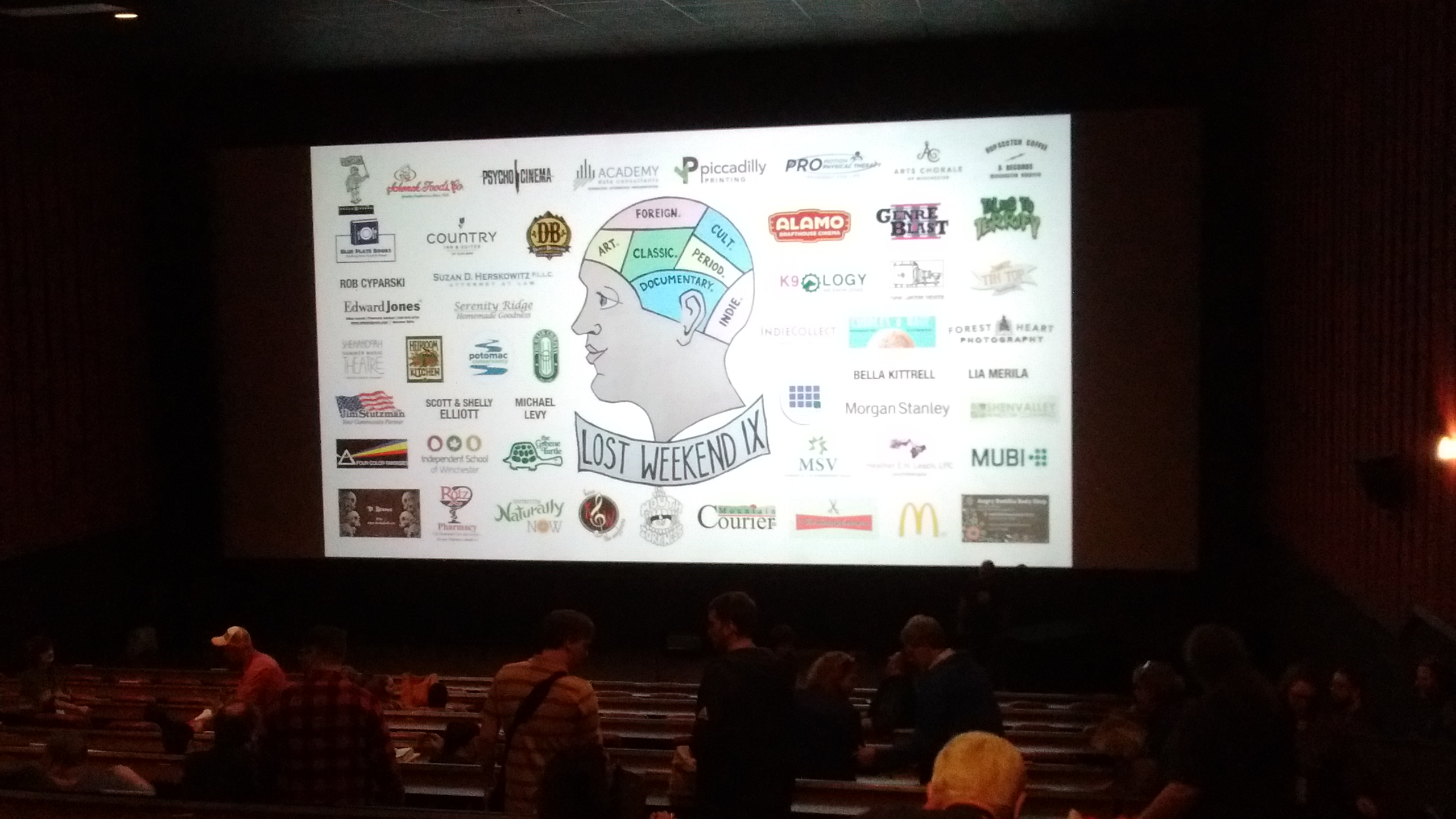
Another Lost Weekend Film Festival, another failure to hang. And this time Andy Gyurisin had actually made it easier to hang: one needed to attend only twenty-four of the twenty-eight movies to win accolades, admiration, and a nifty gold medal good for a ticket exchange next year. I could only do twenty-two. All right, let’s hear it: wuss, lightweight, girlyman, yeah, yeah, yeah. Everyone feel better?
It was, as usual, a well planned operation of chaos and mayhem. F’rinstance, when the launch team showed up in the morning to assemble swag bags, the voting ballots and other items had yet to be delivered. Yikes!
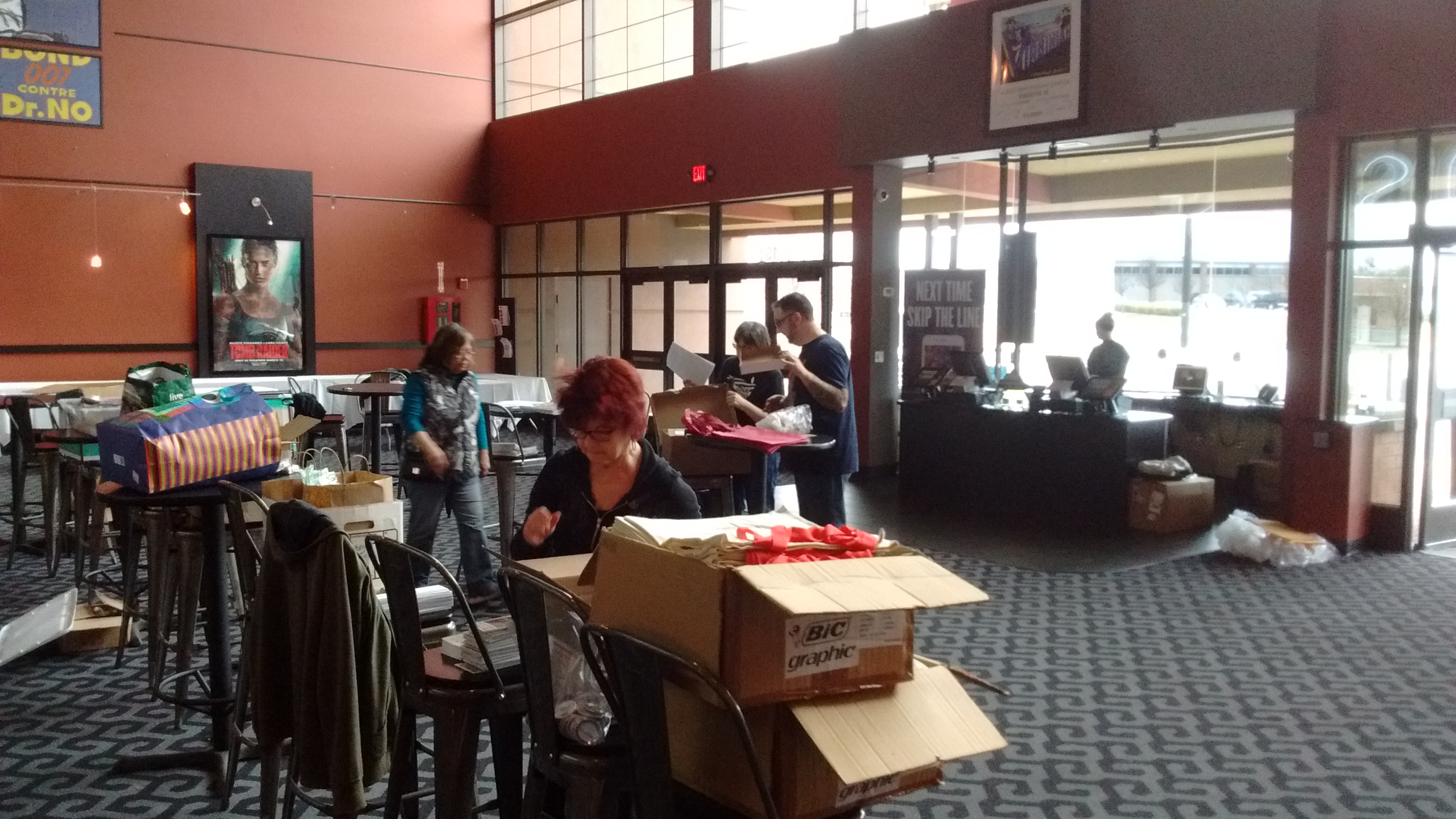
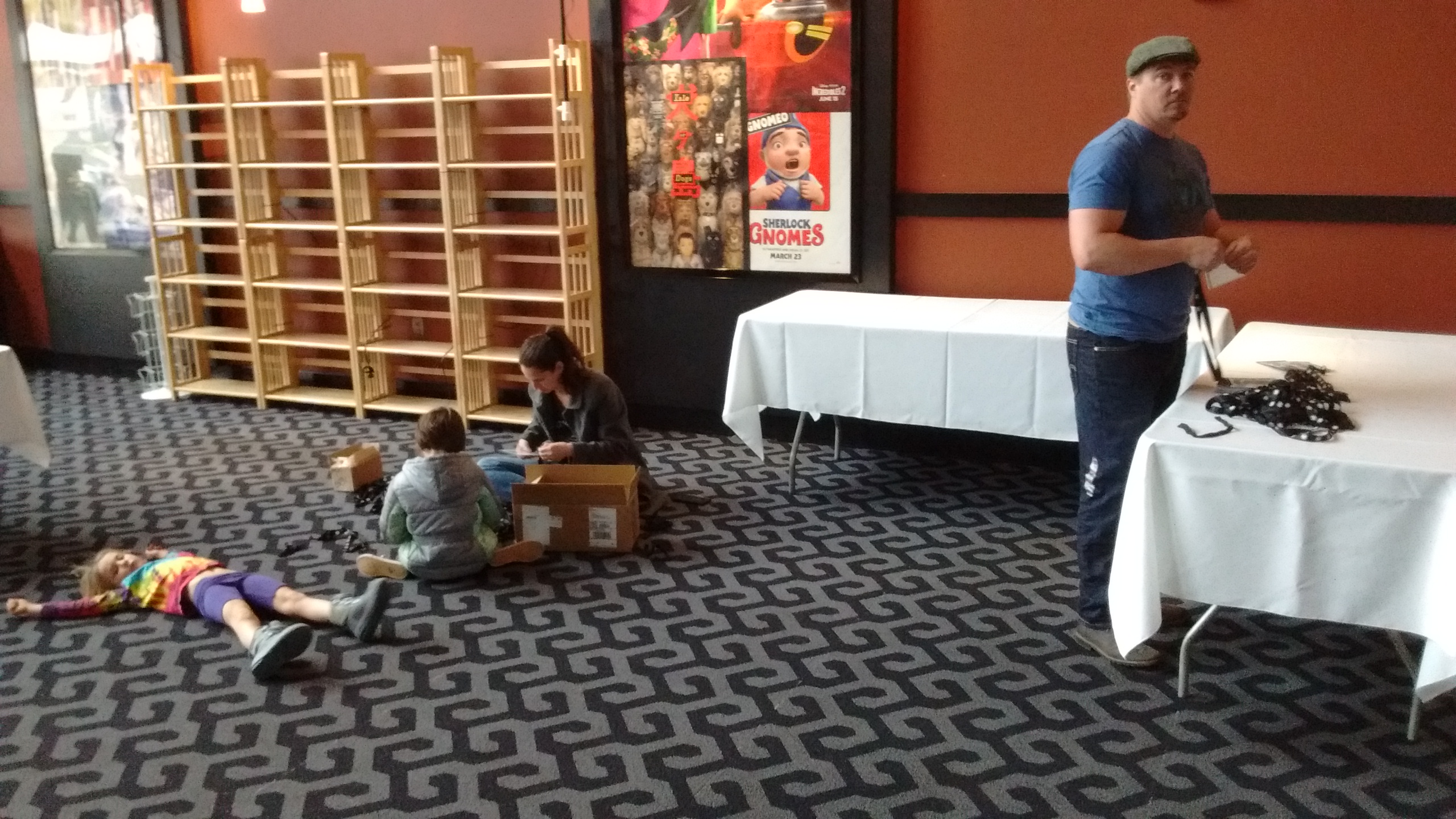
But, at the last minute, things arrived and the team swung into action:
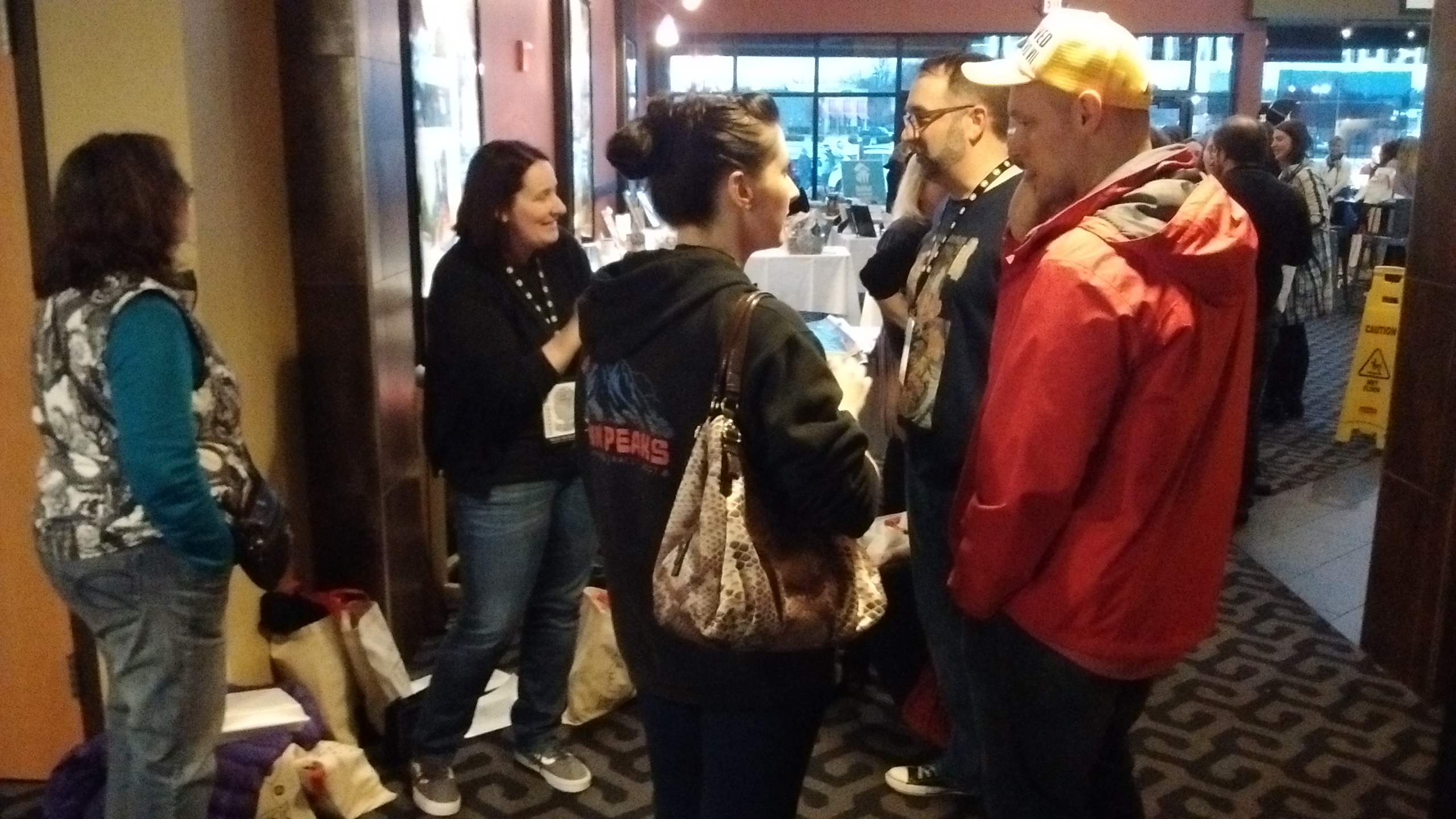
Just in time because the lobby was quickly overrun by those wanting the best seats:
This relentlessly crazy person was first in line, by God:
And then the madness began: twenty-eight movies from Thursday through Sunday night, with about oh, say, ten or fifteen minute breaks thrown in here and there. It wasn’t a movie festival, it was a movie marathon.
The ones I saw:
Rumor is the next Lost Weekend will have thirty movies. Ah, more chances to fail.
Agog. That’s my reaction to the launch of the Heavy Falcon rocket by Space X. Did you see those two boosters RETURNING TO THE LAUNCH PAD???? In case you didn’t…
Hence, agog.
I don’t know if other segments of the population reacted with the same level of agog-ness, but I’m pretty sure a lot of us old NASA geeks did. The few of us left, I mean. A warming cockle of a distant heart, it was, a re-beating of a moribund spirit, a harkening back to naïve youth and the naïve belief in unlimited horizons and The Futuuuure! that we NASA geeks lived and breathed during the Space Race days.
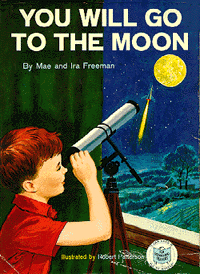
It’s amusing to think of it now but, back then, we were all convinced we were getting jetpacks and would live on the moon. Indeed, one of my favorite picture books was:
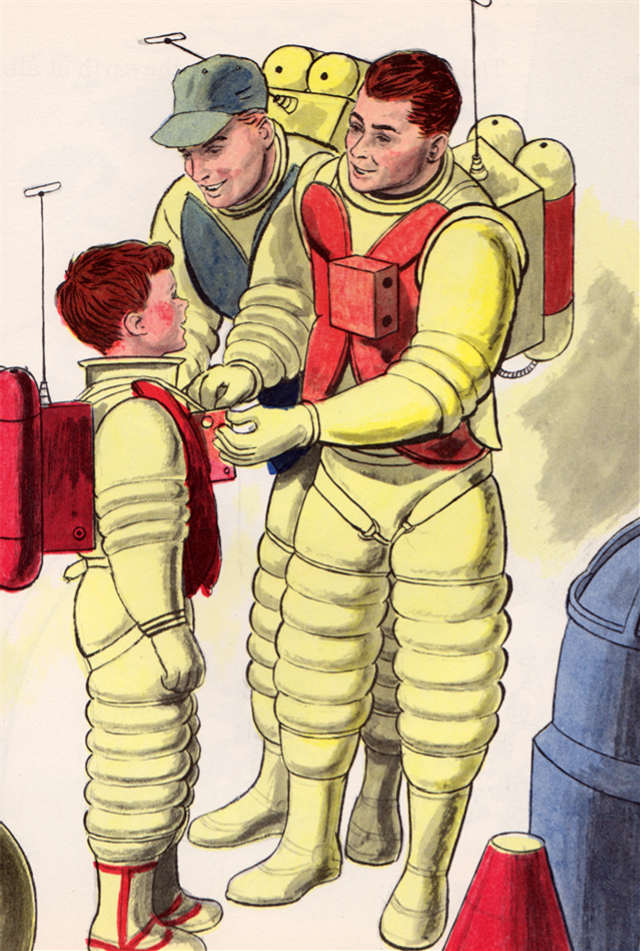
which I devoured over and over and over when I was five or six years old, the odd drawings of young spacemen grinning at the little boy in a rather predatory manner notwithstanding.
We were going to live on the moon! And have jetpacks! Neat!
We said “neat” back then. “Cool” came later.
I was a little too young to remember Sputnik and the ensuing panic, but I clearly remember John Glenn’s Friendship 7 take-off from Cape Canaveral (as it was known then before it became Cape Kennedy then back to Canaveral so most of you probably are not aware of the name change) because every classroom in BC Swinney Elementary School in Lawton, OK had a television wheeled in and tuned to so we could watch. Which just wasn’t done, wheeling televisions into classrooms, that is, signaling to all of us pointy-headed kids that this was a Big Deal. It certainly was to me. I was thrilled, astounded, amazed…agog. And, yes, I know, Alan Shephard had actually launched into space a year before and I probably saw that, too, but there is something about the Glenn launch that remains better seared into memory. I guess because that launch was the first US orbit of the Earth and all we pointy-headed kids knew that the Russkies had gotten there first and we were going to fall under Soviet domination if we couldn’t match, nay surpass, their effort. So it was with great geopolitical relief that we kids watched the launch and splashdown and all breathed a collective sigh of relief that Western Values and the American Way were once again dominating…
Of COURSE we didn’t think that. We thought we were going to live on the moon. And get jetpacks.
At least my best friends and I did. This conviction was enthusiastically shared among the very small (about three, if that) group of dweebs and nerds I hung out with; we bought models of Mercury and Apollo spaceships and mounted them on displays for science fairs and had crappy little telescopes and joined the NASA Kids’ Club and got autographed pictures through the mail of astronauts in training like Mike Collins and Neil Armstrong (man, I wish I still had those) and knew when every launch was scheduled and begged and pleaded Dad to take us to Cape (then) Kennedy so we could see a launch and no, I’m not going to waste a bunch of money so you stupid kids can watch something you can watch on TV, even though we were living in LA (lower Alabama) at the time and the Cape and Cocoa Beach (where Tony and Jeannie lived) was about a four hour drive. Would have interrupted the servicing of his many girlfriends, I guess.
The astronauts were our heroes, the space program was our inspiration. War would end. Nations would unite. We would explore the galaxy. We would live on the moon.
What the hell happened?
A few things. The first was the slow disintegration and suddenly spectacular destruction of my family during the period of the Apollo program, which serves as inspiration for my (WARNING: shameless self-promotion ahead!) upcoming Frank Vaughn trilogy (Frank Vaughn Killed by his Mom, Southern Gothic, Looking for Don). I went from breathless excitement during Apollo 8’s magnificent 1968 Christmas Eve broadcast from the moon
to frantically squinting through my laughable 60 power telescope the night of July 20, 1969 to catch a glimpse of Aldrin and Armstrong cavorting on the moon to…not even watching the news broadcast of Apollo 17’s last moonwalk in Dec 1972. Didn’t care anymore. That whole “family destruction” thing.
And I wasn’t the only one. No one cared. There had been a national-level destruction to go right along with my personal one and we turned away from space programs and The Future to social programs and the Right Now and did not ask what you could do for your country but asked what are you doing for ME, man? We saw no farther than the bridge of our noses. We looked down at our shoes, not at the sky. We wanted to Get Ours, not Go Out There. And all that space stuff was silly and expensive and we’ve got more important things to worry about here like oil shocks and inflation and worldwide liberation movements and finding jobs and just getting by.
No living on the moon. No jetpacks.
And, now, look at this. Someone has revived it. The spirit stirs. And maybe you kids will get to live on the moon someday. Me, I’m too old.
But I’d still like to have a jetpack.
In the midst of this brutal cold we’ve been experiencing the last few weeks, a sunny spring-like day popped up. All the kids were out in all the playgrounds and it was delightful weather and I was reminded of a Ray Bradbury story, All Summer in a Day: the clouds on Venus part once every ten years and all the kids go outside for a few hours. I then wondered if anyone still reads Bradbury.
Do they? Or is he another one of those authors everybody knows but doesn’t read, like Heinlein and Asimov; you know, a nod of respect to the founding fathers of science fiction, but there’s newer and, admittedly, better writers out there like Daniel Suarez, Alastair Reynolds and such? We know the importance of George Washington, but only academics read his Inaugural Address.
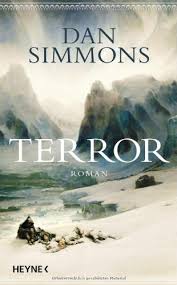
And I guess that is the way of things and something I must also admit to: I do not read the classics anymore, or, more accurately, re-read them, because been there and done that and there is so much else unread. I’m in the middle of Dan Simmons’ The Terror right now,
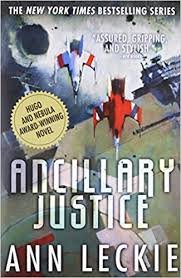
and then I’ve got to finish Suarez’ books and then Ann Leckie’s Ancillary Trilogy 
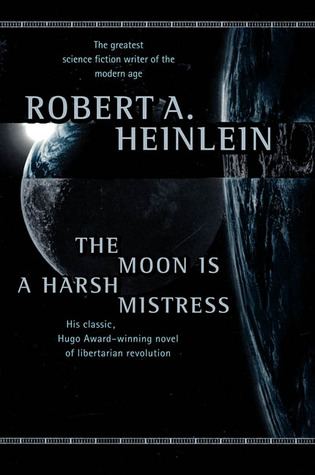
and I subscribe to Clarkesworld and then there’s my own writing and there you go. I think the last classic I re-read was The Moon is a Harsh Mistress, 
and only because I found a copy and bought it for my son…uh huh, yeah, read it before giving it to him. It’s not like I took a bite out of his hamburger, ya know. Don’t look at me like that.
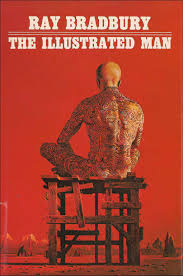
But I make an exception for Bradbury. Whenever I find his books in some used bookstore or a Goodwill, whatnot, I buy it and read it, the last one being The Illustrated Man.
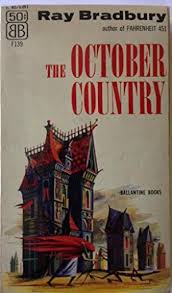
I’ve got an eye out for The October Country
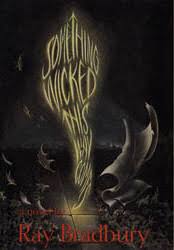
and Something Wicked This Way Comes.
Not reprints, mind you, or at least not recent ones. It has to have the same cover from back when I first read it in the 60s or 70s and yes, yes, I know, I could order from Abe Books but that’s cheating; it’s far more satisfying to stumble across it the same way I first stumbled across Bradbury in the Ft. Rucker, Alabama library, when I was about 12 or 13. He quickly became my favorite author growing up, and running through one of his collections is the quickest way I now have to evoke the feel and the sense of possibility of those years. He quickly became my biggest influence, too. I try to copy his lyrical style…with little success, I must admit, although I write the same long and winding sentences that careen from one subject to another. I don’t have his poetry, though.
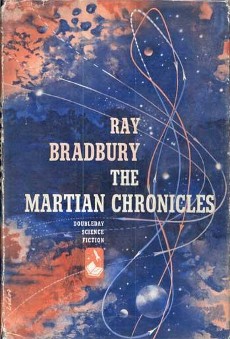
The first Bradbury I read was The Martian Chronicles.
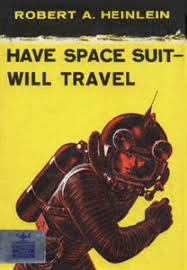
I used to spend quite a bit of time in the library picking up Alan Nourse and Sheila Moon and Have Space Suit, Will Travel 
and what’s this? A novel set on Mars? Cool! So I checked it out, not realizing it was actually an anthology of short stories with a Martian theme. Didn’t care, because the writing was magical and echoed that wistful sense of wonder which was (or should be) the background music of growing up.
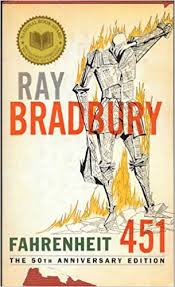
After that, I picked up anything of his I could find. Fahrenheit 451,
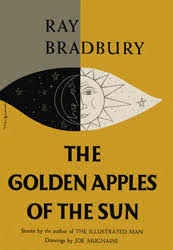
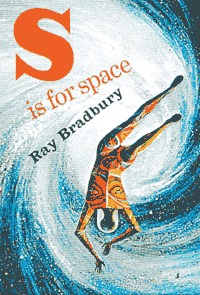
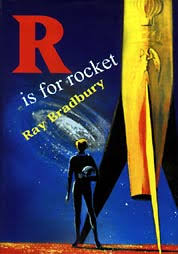
The Golden Apples of the Sun, S is for Space…all science fiction, but not hard scifi. Literary scifi, I guess would be the best description because Bradbury played loose and fast with the rules of science, like the clouds on Venus, which can actually strip you down to a skeleton in about five seconds flat. But getting all the hard science exactly right wasn’t the point. It was more important to capture a mood, such as the one in R is for Rocket, 
which imbued the sense of excitement that we NASA geeks had back then. We watched the space program go from Mercury to Gemini and then, and then…that fabulous July night of the moon landing. And while the world Bradbury described in R was actually dystopian, it was a world that looked forward, like I did, to mankind’s ventures into space.
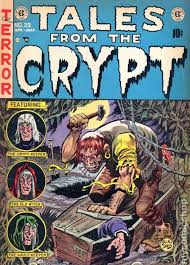
It was his horror writings, though, that affected me the most. Before I read The October Country, horror was all about ghosts and ghouls and bad guys getting their comeuppance like in some EC comic.
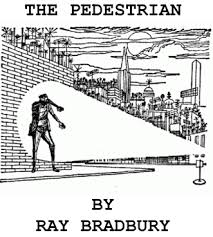
But Bradbury showed the horror that could exist in the everyday, such as a pedestrian out for a nightly stroll,
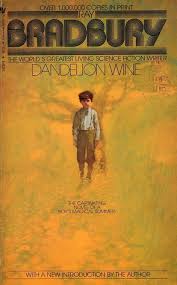
and that horror is best conveyed simply, without slashings and over-the-top scares. One of the most frightening last lines I’ve ever read is from a story of his called The Whole Town’s Sleeping in Dandelion Wine
(which is not even a horror or scifi collection): “Behind her, in the living room, someone cleared his throat.”
Scared the bejesus out of me.
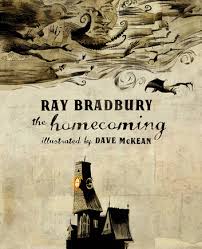
As did the Eliot family in The Homecoming,
as did the novel Something Wicked This Way Comes, although I did find the ending rather corny. Bradbury wrote poetry of fear; the things that scare us could be a lyric.
One day I’ll write like that.
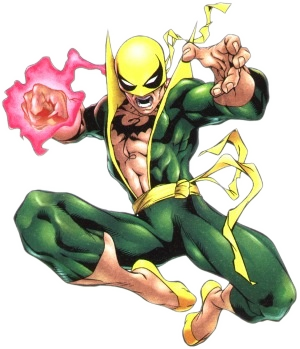
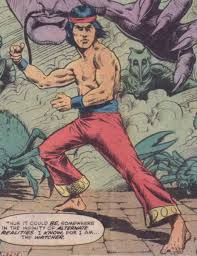
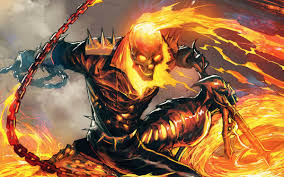
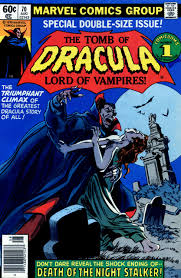
I was never a big Punisher guy. He came along in the middle 70’s, which is about the time I lost interest in comics. All I was reading by then were Iron Fist, Shang-chi, Ghost Rider, and Tomb of Dracula. 
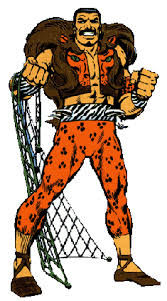
Martial arts and horror, those were my things. I knew about the Punisher because he popped up here and there but didn’t really pay attention until he showed up in some Spiderman cartoons in the 80s and 90s. I always regarded him as a Spiderman enemy along the lines of early Kraven: somewhat misguided but, overall, not evil.
Yeah, saw the Dolph Lundgren movie, which was silly, and the dreadful Thomas Jane one but those didn’t move the needle.
What did was the Punisher in Season 2 of Netflix’s Daredevil series. He was cool, and crazy. Punisher killed everybody, quite justified, IMHO. Jon Bernthal was an excellent cast choice, all broody and unpredictable and dangerous, just the way you think the Punisher should be, although Bernthal comes off as a bit denser and more uncouth than the comic book version. So when Netflix announced a stand-alone series, I was in. I finished it last week. Verdict?
It’s good. Damn good. Better than I thought it would be, given the way Netflix has screwed up the other Marvel shows.
The Punisher is Frank Castle, a man on a mission to kill the rotten bastards who staged the murder of his family in a botched attempt to kill him (BTW, you never see the actual murders of his family, just enough to know what happened. Which is an odd bit of restraint). The rotten bastards want to kill him because Frank is a former Marine Recon member of an assassination unit illegally set up by the CIA to take out terrorists in Afghanistan. Cleaning up the loose ends, doncha know. The CIA effs it up, leaving Frank Castle alive and berserk. Hoo boy, is he berserk.
Helped by an equally-savaged innocent bystander named Micro, Frank goes out to balance ledgers. And balance them he does. And it’s not pretty. Really, if you like your killings frequent and forensically correct, you’ll love this because every episode is murder porn and over-the-top violence with Frank taking and taking severe damage (which he recovers from in astonishing time, like he’s Wolverine or something). Add torture, great sex scenes, and various other forms of mayhem, and you’re in for an evening.
A lot of fun, but I don’t think murder and mayhem is what this series is about. No, it’s there’s no more justice. Not anymore. Not since the various government agencies discarded public accountability and became rogue departments with agendas and intents unto themselves, at the same time the courts became a way for lawyers to amuse and impress each other rather than the means of ensuring a just recompense for we Little People. Don’t you peasants know there are bigger Deep State and Elitist concerns than mere nuisances like your family’s murder? Yes, yes, regrettable, those murders, but you can’t make an omelet without breaking a few eggs. You peasants.
If your family is murdered in a regrettable but necessary covert action to cover up a government screw-up, you’re gonna have to get your own justice. You must become Frank Castle because it’s not that the police and the courts and the government don’t care as much as has other interests, like getting and retaining power and control, and your petty little bourgeois problems distract from that. Only DHS Agent Madani,
played by the gorgeous Amber Rose Revah, wants to right the numerous wrongs, and she’s treated like she’s some kind of naïve idiot by bosses and other supervisors for so wanting. She eventually has to ally with Frank to get anything like justice done.
[An aside: Shoreh Agdashloo of Expanse fame, plays Madani’s mother. I declare my undying love.] 
Is this what we’ve come to?
Pish posh, no, it’s not, you say, this is mere over-the-top TV show exploitation of current events and besides, what Frank is doing is revenge, not justice.
What, exactly, is the difference?
Because the courts and the police and trials and jails were all developed to ensure passionate revenge was taken out of our individual hands to become dispassionate justice meted out appropriate to the crime and, more importantly, on the right person. Whenever someone does us wrong, from scraping the side of our car to murdering our entire family, our frustrated sense of outrage and lust for vengeance is mollified because these agencies resolve the situation, maybe not to our complete satisfaction, but as long as the result is reasonable, we’re usually okay with it. Until it is no longer reasonable. Until our concerns are given increasingly short shrift.
Consider, we now have agencies that spy on us without warrants or justification, that ruin us with innuendo, that apply the law to one class of people but not to another, and courts that let murderers go because of political ideology. We do not believe what the government or the press says about anything anymore. And the law abiding are increasingly blamed for the non-law abiding. I can see why people would go all Frank Castle on your ass.
And that ain’t good.
A hero arises at a critical moment and changes history…I think that’s a fairly decent summary of the Great Man Theory (spare me, feminists. That’s what it’s called). Either God raises a Great Man or society produces a person with the necessary characteristics, whichever, to save the day. I don’t see how one of those excludes the other so I shall add a corollary: at the right moment in history, someone nuts enough to take on everything shows up.
That’s the movie Darkest Hour: at what has got to be the worst possible moment in history, Churchill becomes Prime Minister of England. The government is dithering, Hitler is burning Europe, and no one in their right mind wants the job. It is the darkest moment; it becomes the brightest as we all with the benefit of hindsight now know and accept because Churchill saved civilization. Well, okay, the Americans helped but, if he hadn’t been nuts enough to take the job, there’d have been no England for us to help. We take this on faith. But if the movie is halfway accurate (and, apparently it is), it wasn’t all that cut and dried. Indeed, it was a Very Near Thing.
For a movie with little action, it’s incredibly tense. The five or six seconds here and there of bombs falling and things blowing up are actually a relief because, hoo boy, all the polite mannerly English drawing room talk which takes up about 95% of the movie has the atmosphere of a knife fight. That’s because Churchill was no one’s choice. For reasons not made clear, he is the only person acceptable to the political opposition when Chamberlain’s incompetence finally causes the just-as-incompetent Parliament to give Nev the boot. The king doesn’t want Churchill. His own party doesn’t want Churchill. Turns out he gets picked because the ever-so-smart sophisticates need someone to blame when Hitler invades England. Yes, when Hitler invades.
The sophisticates have already given up. It’s a complicated, nuanced world you see, and we betters intend to negotiate a peace with Hitler after he destroys our army of commoners (poor blighters) on the beaches of Dunkirk because then the Fuhrer will be reasonable.
Yikes.
So, essentially, Churchill is set up to fail. His own cabinet, including Chamberlain and Lord Halifax, are conspiring behind his back to bring him down and force peace negotiations. And he’s the perfect fall guy. The son of scandalous parents, he’s broke and drunk all the time, incredibly difficult to work with, only his wife able to talk any sense into him (and she’s a piece of work herself),
hated by his kids, laughed at by everyone from butlers to kings, and a colossal failure in his last wartime post (guy’s responsible for Gallipoli).
If everything goes TU, then it’s obviously this guy’s fault. Except…
Except.
Churchill shares the one trait uniting all the other Great Men (and women. I’m looking at you, Margaret Thatcher)
of history: he believes in doing the right thing. Oh, he shares some other unfortunate traits of Great Men and Women (still looking at Margaret): a jackass easy to dislike; not someone you want over to the house for Sunday dinner; loud and obnoxious and annoying and your opinion of him is shared universally with all the other Best People who are just simply appalled, but he’s going to do the right thing. He does not believe in a negotiated peace with Hitler. Oh no. We’re going to fight. On the beaches, in the streets, wherever, but we fight. We are going to get our boys off the beach at Dunkirk and we are going to defy the tyrant and remain England because that is the right thing to do.
He stands alone, is ridiculed, opposed by everyone. Even his faithful war minister turns his back. And he begins to waver, until that marvelous scene when Churchill rides the underground and asks the commoners, the serfs, if he should negotiate. Resoundingly, to a man, to a woman, to even a child, they say no. We fight.
Now, I could talk about production values and acting and writing and direction and lighting (and I gotta say, this is one of the most brilliantly lighted movies I’ve seen in years) like you’re supposed to do when reviewing a movie and yes, yes, all of that was great, but it’s not the point. It’s that the right thing is a function of the powerless, whose whole life consists of doing the right thing and who are not cynical nor jaded enough to accept fashionable opinions because, as Orwell said, there are ideas so stupid that only an intellectual could believe them. The powerless, the Great Unwashed, are laughed at and patronized and crushed by the sophisticates until events become critical and we’re all going to die and then the Great Man shows up and does the right thing, their right thing, which is counterintuitive, is always unpopular, and takes a man of great strength to stay on its course. I don’t think I could have, especially when such brilliant intellectual thinkers like oh, well, everybody else says how wrong you are. But Churchill did. And we’re not all speaking German today unless we want to.
Imagine. A leader arises who, despite the concerted and almost unanimous opposition of the elite and intellectual classes, does what the people want him to do.
Sounds vaguely familiar.